
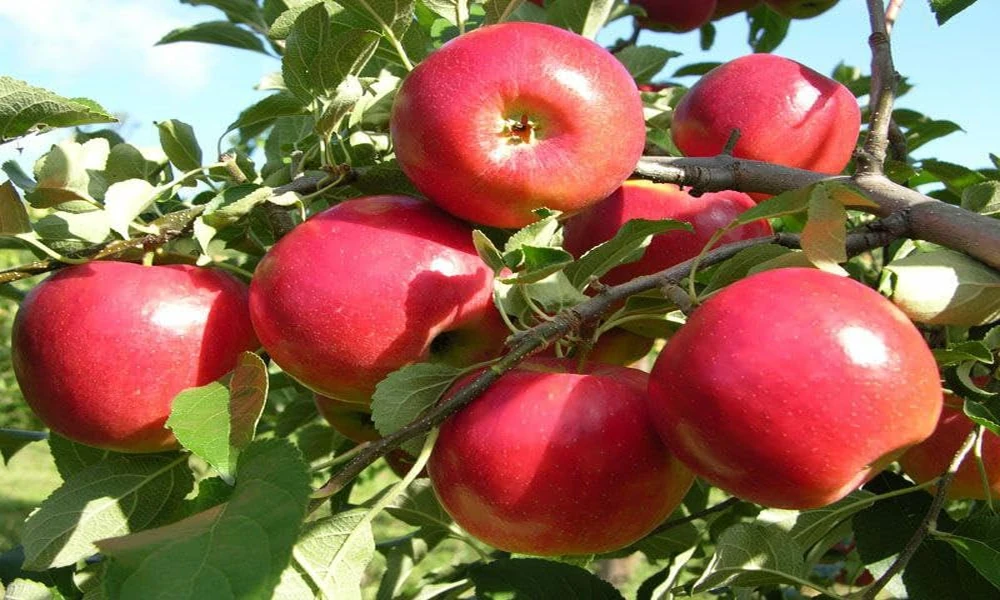

A good apple tart needs rather different fruit from a pan of apple sauce. One cook wants neat slices under the pastry; another wants the apples to collapse without a fight. Yet shopping for a cooking apple tree in the UK can reduce both ambitions to the same familiar name: Bramley.
There is more room for appetite than that. Culinary apples differ in sharpness, texture and season, while some varieties move happily between the fruit bowl and the oven. The useful question is what you would actually cook with a crop. A tree earns its place through meals repeated over years, rather than one impressive photograph of a pie.
Choosing with a dish in mind
The useful catalogue entry tells a cook more than whether an apple is classified as culinary. Texture, sharpness and intended use are the reasons these suppliers are here, followed by the rootstock and form choices that turn an appetite into a tree order. Their published descriptions provide the comparisons. The sequence begins with detailed culinary selections, then considers regional help and more focused retail routes.
The kitchen brief still has to meet the garden. Rootstock influences eventual size, and blossom compatibility matters even when two apples ripen months apart. A triploid such as Bramley is a poor pollen donor, which needs attention when planning a small group of trees. None of those details makes a particular filling more delicious, but an unproductive or unmanageable tree will supply very little filling at all. Delivery also depends on the supplier, season and destination, especially outside mainland Great Britain.
1. Chris Bowers & Sons
The cooking notes among the apple trees for sale at Chris Bowers & Sons give UK gardeners a useful starting point for choosing what will eventually go into the saucepan. Reverend W. Wilks is a telling example: the nursery describes tender flesh that cooks to a golden froth. That is a much more appetising reason to consider a tree than the broad label “culinary”.
For a cook who wants a soft filling or a spoonable accompaniment, this description establishes a purpose before the discussion turns to size. Someone hoping for distinct slices should pursue a different texture. The nursery’s cooking and dual-purpose selections leave room for both approaches, with rootstock and tree-form choices alongside the varieties.
There is a pleasing economy in choosing this way. A garden with room for one cooking apple does not need to reproduce an orchard catalogue; it needs a variety whose strengths suit the household. Reverend W. Wilks also comes with pollination considerations in the nursery’s description, so the final choice belongs in a conversation about neighbouring blossom as well as the next crumble.
2. Keepers Nursery
Sharp and fluffy, or sweeter and more willing to hold its shape? Keepers gives this distinction proper space in its cooking-apple guidance. Its range includes Annie Elizabeth, Bountiful, Bramley and Howgate Wonder, allowing the conversation to move beyond the assumption that every cooker does the same job.
The Kent nursery’s hand-grafted, bare-root trees make the selection a planting decision rather than a supermarket taste comparison. For someone who bakes regularly, the valuable part is the connection between the variety description and the result wanted in the dish. A sharp apple that breaks down readily may be ideal beneath a crumble topping; it is a less obvious choice when the arrangement of slices is half the pleasure. Keepers is worth reading slowly with those two desserts in mind.
3. Ashridge Nurseries
Bramley deserves its familiarity. Ashridge describes its tendency to break down during cooking, a characteristic that explains its enduring appeal for sauces and soft fillings. The same account also exposes the weakness of asking for “a good baking apple” without saying what the baking involves.
Here the tree forms are part of the purchase: maiden, bush and half-standard describe different starting points and shapes. A young maiden leaves more formative work to the grower; a larger form makes a different demand on space and harvesting arrangements. Bramley’s triploid status belongs in that decision too. In a small garden, the pollen arrangement may take more thought than the recipe. Ashridge’s role in this list is a clear route to a familiar cooker with those practical distinctions visible, rather than an invitation to treat familiarity as a complete planting plan.
4. Orange Pippin Trees
A regional name can open a useful culinary detour. Orange Pippin’s information on Scotch Bridget and Scotch Dumpling introduces cooking apples associated with Scotland, while Blenheim Orange broadens the conversation towards dual-purpose fruit.
The attraction here is the retailer’s variety information. It allows an interested cook to follow a description, compare its intended use and then bring climate and tree specification into the choice. Heritage alone does not determine how an apple behaves in a particular recipe, so the useful reading is in the detail, rather than simply the place name.
For a garden needing a trained form, the delivery route deserves early attention: those trees have narrower arrangements than ordinary orders. That can decide whether a tempting variety is practical to buy in the required shape.
5. Pomona Fruits
Blenheim Orange offers an appealing possibility for the household that would rather have one versatile apple than separate trees for every recipe. Pomona’s description draws attention to its ability to hold its shape when cooked. Arthur Turner, also in its range, takes the discussion towards baking and purée.
Those examples help a buyer make a meaningful comparison within the broad cooking category. The choice can begin with the dish, then include how much fruit will be eaten fresh and how much kitchen work the household enjoys. Dual-purpose is useful when both purposes are welcome. It is less persuasive if it becomes a compromise that satisfies neither the person wanting a crisp eating apple nor the person making smooth sauce. Pomona’s variety-level notes provide material for that conversation.
6. Frank P Matthews
There is a second recipe to settle: the one for the tree itself. Frank P Matthews lists cooking apples including Annie Elizabeth, with the wider catalogue, online shop and Tree Shop providing different ways into its nursery range.
This matters when a variety has already won the kitchen argument. The remaining purchase is a particular combination of variety, rootstock and form, available through a particular route. A catalogue entry describes the possibilities; the live sale specification identifies the tree being ordered.
Annie Elizabeth might already have won its place in the recipe book. The remaining decision is whether the available tree fits the ground outside the kitchen, with enough room around it to pick the fruit comfortably.
7. The Heritage Fruit Tree Company
Regional cooking varieties have a place in a kitchen that enjoys learning what to do with a crop. The Heritage Fruit Tree Company’s range extends from smaller trees to orchard forms, so an interest in an older apple need not imply room for a traditional full-sized orchard.
Its distinctions between locally available potted trees, seasonal bare-root stock and the origin of particular stock are relevant to the purchase. They should sit alongside the variety’s culinary description, rather than being lost in the romance of an old name. A cook may choose an unfamiliar apple precisely because it invites a different pudding or preserve. That is a sound reason for curiosity, provided the tree’s identity, expected growth and actual collection or delivery arrangement are settled before ordering.
8. Scottish Heritage Fruit Trees
Sometimes the most useful answer starts with the garden rather than the menu. Scottish Heritage invites discussion of the site, including photographs, before recommending trees. For an exposed or otherwise demanding location, that can narrow the culinary possibilities considerably.
A favourite cooker from a mild, sheltered garden elsewhere may be a poor starting assumption. The nursery’s approach gives the buyer a way to describe the actual position, soil and surroundings, then ask which cooking uses can realistically be served there.
This makes it particularly relevant when a regional planting question remains unresolved. The purpose is to find an apple that can ripen satisfactorily and be useful in the kitchen, without treating a Scottish association or a hardy description as a promise of identical results across very different sites.
9. Walcot Organic Nursery
Acidity deserves as much attention as texture. Walcot’s guidance groups apples in ways that help explain their eating and cooking character, with culinary names such as Grenadier, Lord Derby and Howgate Wonder in its range.
A household already freezing batches of sauce may care more about a suitable harvest period and a useful balance of sharpness than another celebrated variety. Walcot’s seasonal information helps place the tree within that routine. It also makes the nursery’s own organic apple-tree production relevant without allowing “organic” to swallow the rest of the specification. Its bought-in fruit bushes have different sourcing and status; the claim should stay attached to the trees it actually covers. The culinary decision remains a particular apple for a particular use, with the production method another clearly identified part of the choice.
10. Marshalls Garden
A focused retail route suits a cook who has already decided that Bramley is the answer. Marshalls lists a bare-root Bramley on MM106, giving that familiar fruit a definite planting specification.
MM106 is a more substantial proposition than a permanently tiny patio tree. There needs to be space for the resulting growth and a sensible way to reach the crop. This purchase makes most sense after the garden and pollination questions have been answered, when the task is to source a defined tree rather than explore every possible cooking apple. For a household that repeatedly makes soft apple fillings, that can be a perfectly satisfying endpoint.
Two meals before one tree
Put two actual dishes beside the shortlist. If both depend on apples collapsing, concentrate on that behaviour. If one needs slices that stay distinct, look for a description that addresses it directly. A dual-purpose variety earns extra interest when fresh fruit will also be eaten, rather than because versatility sounds inherently better.
Then think about the week the crop arrives. A useful cooker can still produce more fruit than a household wants to process at once. Storage, freezing space and the time available for preparation belong in the decision. The tree should fit both the garden outside the kitchen and the life going on inside it.
Source note: Supplier variety descriptions, tree specifications and growing information informed this selection; RHS guidance informed the general horticultural context.




Leave a Comment