
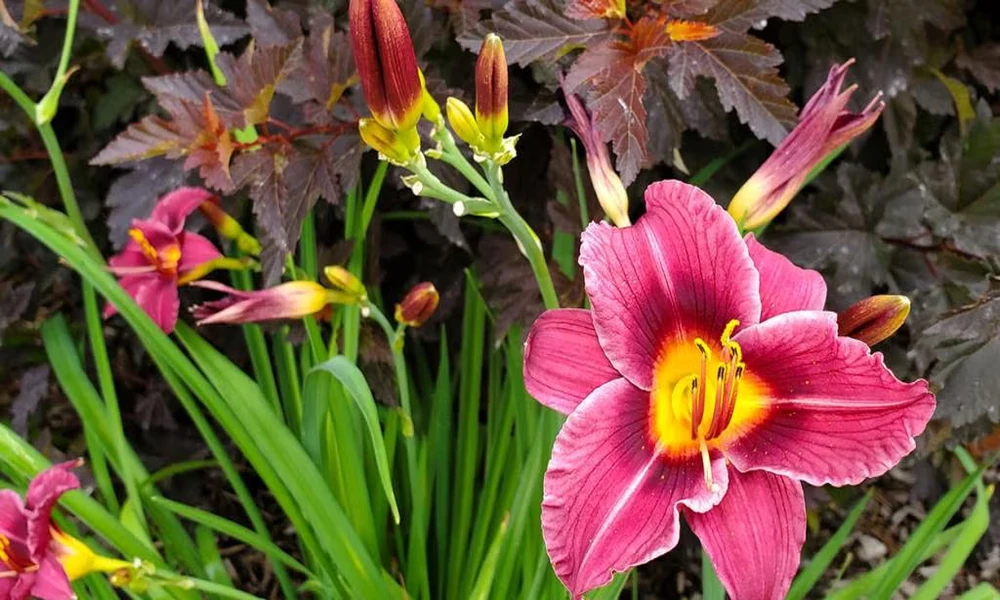

Spider and unusual form describe two ways of looking closely at a daylily. One begins with petal proportions; the other with shapes such as curling, pinching and cascading. For UK gardeners interested in those distinctions, a named plant and a precise nursery description are more useful than a photograph captioned simply ‘unusual’. These five nurseries provide specific forms to investigate and routes to obtaining them.
The names matter. Spider has a measured definition in daylily classification: petal length must be at least four times its width. Unusual form describes particular shapes, including pinching, twisting and cascading, rather than an especially unexpected colour. A narrow flower in a photograph is therefore a starting point for investigation, not a classification by itself. Some cultivars combine characteristics, but the two terms are not interchangeable.
There is a buying distinction, too. One nursery posts pot-grown plants; another sends divisions with several fans of leaves. A specialist sales list may require an email, while a particularly appealing cultivar may be waiting for replenishment. These five nurseries have specific flowers worth examining, with practical differences kept alongside the attraction of the bloom.
How flower form shaped the shortlist
Three criteria govern this selection: a named spider or unusual-form daylily, a genuine nursery buying route in Britain, and a useful reason to choose that offer. The order develops a comparison from curling form through measured classification and specialist selection to a particularly tall scented example; it is not a performance score. Nursery descriptions supply the cultivar details, while the American Daylily Society’s definitions keep the terminology consistent. An unavailable plant remains here only where its combination of form and stature gives a clear reason to enquire rather than substitute an unrelated daylily.
1. Swallowtail Daylilies
For UK gardeners drawn to curling spider daylilies, SwallowtailDaylilies offers Curly Cinnamon Windmill with narrow petals that turn and sweep away from the centre. The Norfolk nursery gives it 28-inch flower stems and an early to mid flowering season. Those stems are roughly 71cm high: substantial enough to lift the shape into view, without requiring the tallest position in a planting.
The dimensions sharpen that picture. An 8.5-inch bloom spans roughly 21.6cm, so the curl belongs to a substantial flower. Follow a petal from the throat towards its tip and the changing direction becomes the feature to examine. The broad span gives those turns room to register. A collector interested in movement within the flower could use Curly Cinnamon Windmill as a reference for comparing more rigidly extended petals elsewhere in the group.
Pot-grown supply means the plant arrives rooted in growing medium, and collection can be arranged. The early-to-mid designation locates it within the nursery’s daylily season. Together with the listed height and diameter, that gives the form a setting: a broad, curling flower carried around 71cm above the soil, obtainable as a potted plant. Those details are enough to distinguish the offer from a division chosen mainly for a formal petal ratio.
Curly Cinnamon Windmill makes a useful opening example because the changing outline can be read within one bloom. Its narrow petals turn away from the centre, so shape becomes something to follow rather than merely a category printed beside a name.
2. Strictly Daylilies
Black Arrowhead makes the classification unusually tangible. Strictly Daylilies lists a spider ratio of 4.11 to one, alongside dark purple flowers, an 86cm height and a 19cm bloom diameter. That ratio sits beyond the four-to-one threshold. For a buyer specifically collecting flower forms, it answers a question that a dramatic photograph alone cannot settle.
Dark purple adds a second identifying feature to Black Arrowhead, but the numerical proportion is what settles the spider question. The ratio means that the measured petal length exceeds its width by a factor of 4.11. That clears the four-to-one threshold by a modest amount. A very narrow impression in a photograph and a qualifying measured proportion are related observations; the published figure supplies the more precise basis for this particular classification.
Plants are grown in pots but dispatched as mature bare-root divisions, described as having three to five fans. Allow for planting that division when it arrives. The nursery states mainland British delivery, which makes Black Arrowhead accessible beyond a visit to its Cambridgeshire base, subject to the order’s destination.
Compare its 4.11-to-one ratio with Kindly Light’s 7.7-to-one later in the list. Both qualify as spiders, yet their recorded proportions differ substantially. The classification contains variation of its own, which is one reason a collection devoted to a single form can remain interesting. Black Arrowhead also contributes the dark colour and an 86cm flowering height to that comparison.
3. Pollie’s Daylilies
At Pollie’s, the attraction is the opportunity to compare forms within a specialist selection. The nursery’s sales catalogue includes Apron Strings and Black Arrowhead among spiders, and Envy Me and Orchid Corsage among unusual forms. It is relevant to someone still deciding which kind of outline to collect, rather than already searching for one exact plant.
Orders involve contacting the nursery, with carriage calculated for the selection. Its stated mailing windows run from April to June and again from late August to early October. Those windows can suit a planned addition to a collection, but are less convenient for filling an urgent gap at an arbitrary point in summer. Bloom-time visits and collecting an order are separate arrangements.
An enquiry could begin with a spider and an unusual form together, then develop around the plants available. Apron Strings and Orchid Corsage, for example, give the nursery two concrete names to discuss. That focused exchange would suit a collector curious about the differences between forms and willing to plan within a mailing season.
4. New Hope Daylilies
Kindly Light takes the proportion much further. New Hope gives the green-yellow spider a ratio of 7.7 to one at a flowering height of 74cm. That ratio concerns the petal’s length relative to its width. It describes markedly greater elongation than Black Arrowhead’s 4.11-to-one figure, even though both fall within the same named class.
Such a long-petalled example makes an instructive companion to a broader-looking spider. The green-yellow colouring allows the narrow shape to remain the central interest. Someone already growing conventional yellow daylilies could introduce a strong change in form within a familiar colour family. For a collection organised around the extent of petal elongation, Kindly Light would provide a particularly clear point near the slender end of this small group.
The Shropshire nursery offers two to three bare-root fans and identifies the flowering period as mid-season. These details turn the cultivar from an abstract classification into a purchase that can be planned. The division format should be compared with other divisions, while flowering time should be considered against the plants intended for the same part of the border.
5. New Forest Hostas & Hemerocallis
Heavenly Flight of Angels adds height and fragrance to the spider search. The nursery describes yellow-green flowers edged with white, a bloom diameter of 18cm and flower stems reaching 99cm. It is a mid-season example with a paler, loftier presence than the dark Black Arrowhead discussed earlier.
The listing is out of stock, so an order depends on replenishment. Ask about the named cultivar if its pale colour, scent and height are important to the plan. A fixed planting deadline would make a currently available spider elsewhere a more practical choice.
New Forest grows plants at its Hampshire nursery. With Heavenly Flight of Angels, the white edge adds another detail to inspect around those elongated petals. A pale spider on tall stems might be placed where its outline can be seen against darker foliage, bringing a different emphasis from the darker flower at Strictly.
Set its 99cm stems beside Kindly Light’s 74cm and Curly Cinnamon Windmill’s approximately 71cm. The pale spider would appear noticeably higher in the proposed group, even while its listed 18cm bloom is narrower across than Curly Cinnamon Windmill. That is another way to organise a form collection: similar openness at different heights, with the taller pale flower given a clear background. The height comparison concerns the nursery descriptions, with latitude for the established plants.
Let the outline lead the decision
Start with the feature that would actually make the plant different in your border. Curly Cinnamon Windmill supplies movement through curling petals. Black Arrowhead combines a dark tone with a documented spider ratio. Kindly Light stretches the proportional argument further, while Pollie’s makes it possible to explore more than one form through a specialist list. Heavenly Flight of Angels is the taller scented candidate, subject to availability.
For the first comparison, keep the flower-form term, any published ratio and the cultivar name together. Then add colour, stem height and supply format. That sequence preserves what drew the search towards these plants in the first place. A formal threshold explains why Black Arrowhead and Kindly Light qualify as spiders; the actual flowers explain why a gardener might want both. The unusual forms offer another line of enquiry through the direction and shape of their petals.
Source note: Cultivar descriptions, sales catalogues and ordering information come from the five named nurseries. Flower-form definitions follow the American Daylily Society’s spider and unusual-form reference pages; no personal growing trial is implied.




Leave a Comment