
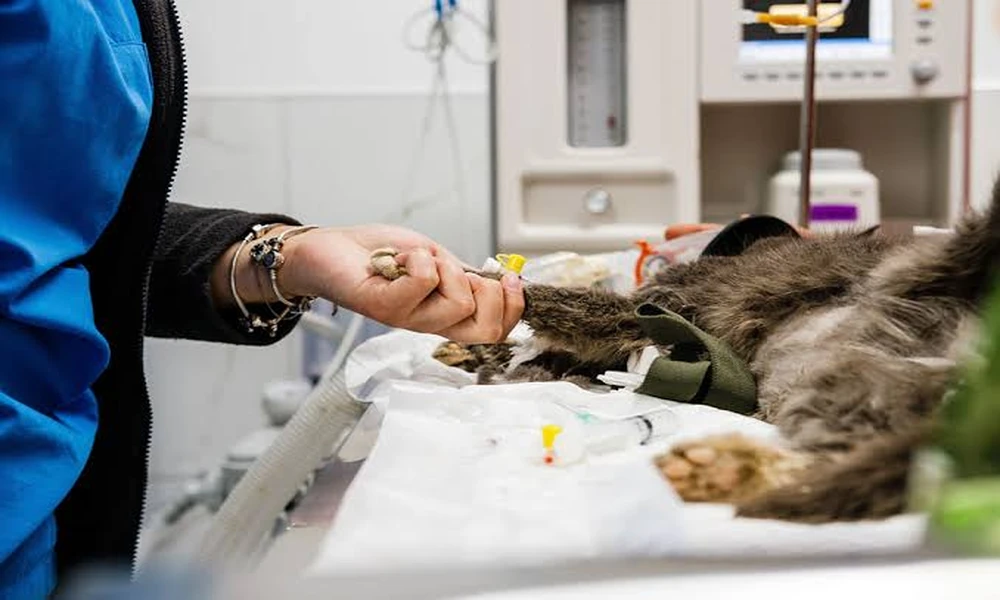

Your pet is already in the hospital, you are tired, and every update feels loaded. Then you hear that the medical team wants a specialist involved at an animal hospital serving Orlando pet owners. That can sound alarming, like things just got more serious, more expensive, or more uncertain. Sometimes that is true. Sometimes it simply means your pet needs a doctor with deeper training in one part of medicine, such as cardiology, surgery, neurology, oncology, or internal medicine.
When a hospitalized pet needs a specialist consultation, the goal is usually clarity and better treatment, not panic. The hospital team stays involved, the specialist reviews the case, and you may get a more precise diagnosis, a new treatment plan, or advice about transfer if your pet needs equipment or care that another facility provides. specialist care for hospitalized pets often helps the primary team move faster and make better decisions when the case is not straightforward.
A specialist consultation adds focused expertise to your pet’s hospital care
A general veterinary team can handle a wide range of emergencies and illnesses. Some cases push beyond routine care. A dog with sudden seizures may need a neurologist’s input. A cat with severe breathing trouble may need a cardiologist or internal medicine specialist. A pet recovering from trauma may need a surgeon to decide whether an operation is needed now, later, or not at all.
This usually starts with the attending veterinarian. They examine your pet, review lab work, imaging, response to treatment, and the pace of change. If the case is complicated, stalled, or high risk, they request a consultation. In teaching hospitals and specialty centers, that process may happen in house. In other settings, your veterinarian may call an outside specialist, send records for review, or recommend transfer.
You might hear terms like referral, consultation, or specialty service. They overlap, but they are not always the same. A consultation means another expert weighs in on your pet’s care. A referral often means your pet is sent to a specialty hospital for treatment there. Veterinary teaching hospitals explain these pathways clearly through services like referrals and consultations and referral services, where specialists work with primary veterinarians to guide next steps.
The hardest parts are uncertainty, cost, and fast decisions
The emotional strain is real because a specialist consult often arrives when you are already stretched thin. You may be trying to understand test results, answer consent questions, and decide how far to go with treatment while worrying about your pet suffering. If your veterinarian says, “We want a specialist to look at this,” you may hear, “Something is very wrong.” What they may actually mean is, “We do not want to guess.”
Cost is another pressure point. A consultation can add exam fees, advanced imaging, repeated bloodwork, procedures, and longer hospitalization. If transfer is needed, transport and a new hospital deposit may follow. That does not mean specialist input is always the most expensive path. In some cases, getting the right expert involved early avoids repeated trial treatments, delayed surgery, or missed complications.
Timing matters too. A stable pet may stay where they are while records are reviewed. An unstable pet may need transfer the same day. If a specialty hospital is involved, you may need to coordinate availability, records, and arrival details quickly. Hospitals such as Washington State University outline how specialty appointments and case coordination work through their appointment process, which can help you understand what happens behind the scenes.
Specialty consultation can change the plan in very practical ways
A specialist may confirm the current treatment, which gives your team confidence to continue. They may also change the plan in ways that matter right away. A radiologist may identify a mass that changes surgery planning. A cardiologist may find heart disease that makes anesthesia riskier and requires medication before any procedure. An internal medicine specialist may recommend a feeding tube, a transfusion, or a biopsy because waiting longer could narrow your options.
This is where what happens when a pet in the hospital needs a specialist becomes less abstract. It often means your pet’s care becomes more targeted. The team is no longer treating a broad problem like “not eating” or “difficulty breathing.” They are treating a more defined condition with a plan built around that condition.
Hospital care with and without specialist input can look very different
| Situation | General Hospital Care Only | Hospital Care With Specialist Consultation |
|---|---|---|
| Unclear diagnosis | Supportive care while monitoring trends | Focused testing and narrower list of likely causes |
| Treatment not working | Medication adjustments based on response | Alternative therapies based on specialty knowledge |
| Surgery decision | May wait for more stability or more signs | Surgeon can assess urgency, risk, and timing |
| Advanced imaging need | Limited to available tools on site | Access to MRI, CT, endoscopy, or guided procedures if indicated |
| Overall cost path | Lower up front, but may involve delays or repeated steps | Higher up front, but may reduce trial and error |
specialist consultation for pets is not automatically the right choice in every case, but it often improves decision making when the diagnosis is uncertain, the risk is high, or the treatment path has real consequences.
Three steps you can take right away
Ask what problem the specialist is being asked to solve. Get specific. Ask whether the specialist is helping with diagnosis, treatment, surgery, prognosis, or transfer. That keeps the conversation grounded and helps you understand the value of the consult.
Request the likely cost range and the next decision point. You do not need every number at once. Ask what today’s consultation may cost, what added tests are most likely, and what decision comes after those results. That makes the financial side less overwhelming and helps you plan.
Clarify whether your pet can stay or needs transfer. If transfer is on the table, ask why, how urgent it is, what care your pet needs during transport, and whether your current team will send records directly. Animal hospital teams do this often, and clear coordination reduces delay.
The right consult can bring direction when everything feels unsettled
You do not need to know every veterinary title or every hospital process to make a sound decision. You need a clear explanation of what your pet needs, why a specialist is being brought in, and what that changes. A consultation does not erase the stress of hospitalization, but it often replaces guesswork with direction, and that matters when your pet is sick and time feels heavy.
If your pet is hospitalized and a specialty opinion has been recommended, ask for the purpose of the consult, the timeline, and the expected next step. Clear answers will help you move forward with less fear and more confidence in your pet’s care.




Leave a Comment