
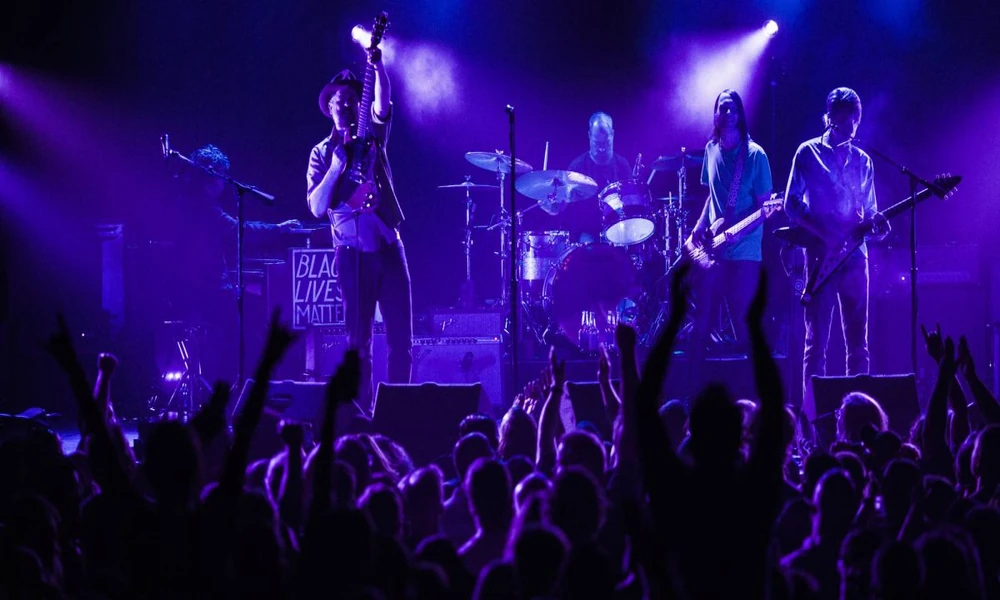

The last stadium show you attended probably cost you $200 in tickets, $30 in parking, and one full hour of your life inching through traffic. You watched your favorite artist on a screen roughly the size of a downtown billboard. And the sound? A wall of bass that turned the melody into a vibration you felt in your molars. That’s not a concert. That’s a sporting event with a playlist.
Intimate venues, the 300-capacity rooms with sticky floors and bartenders who remember your order, are where live music actually becomes an experience. This article breaks down exactly why smaller stages consistently outperform arenas on the things that matter: sound, connection, price, and the feeling that stays with you the next morning.
The Proximity-Authenticity Matrix: A Framework for Venue Choice
Most people pick a concert based on the artist. The smarter move is to pick based on the venue type first, then filter by artist. That’s the core idea behind what I call the Proximity-Authenticity Matrix: a simple way to evaluate any live music opportunity across two axes.
Proximity measures how physically close you are to the performer. Not just distance in feet, but sight lines, stage height, floor layout, and whether you can see the artist’s face without binoculars. Authenticity measures how unmediated the experience feels: raw acoustic presence, absence of jumbotron dependency, and a crowd size where individual reactions still ripple across the room.
Arenas score high on spectacle. Small venues score high on both proximity and authenticity. And here’s the thing: you can recreate spectacle on a YouTube livestream. You cannot replicate the feeling of being twelve feet from a guitarist during a solo that nobody in the room expected.
| Factor | Small Venue (under 500 capacity) | Arena / Stadium (5,000+) |
|---|---|---|
| Proximity to performer | High | Low |
| Acoustic clarity | High (direct sound path) | Variable (echo, delay common) |
| Ticket price range | $15 to $75 typical | $100 to $500+ typical |
| Artist-fan interaction | Frequent | Rare to none |
| Crowd energy reciprocity | Strong (crowd affects performer) | Weak (performer rarely aware) |
| Discovery of new artists | High (openers, local acts) | Low (fixed, known lineup) |
Sound Quality Is Not a Minor Detail
Stadium acoustics are an engineering problem that money has not fully solved. Sound travels at roughly 1,100 feet per second. In a 70,000-seat stadium, fans in the upper deck hear the live sound and the speaker-amplified sound at slightly different times. Your brain registers that gap as a smear, a thickness, a sensation that something is off even if you cannot name it.
A room that holds 300 people does not have that problem. The sound reaches you once, directly, and the room itself becomes part of the instrument. You hear the pick on the string. You hear the drummer breathe. That level of detail is not a nostalgic preference. It’s physics.
The proximity between performer and audience creates an electric energy that’s nearly impossible to replicate in massive venues. Fast Company reported this in 2025 when covering the industry-wide shift toward smaller bookings, and artists themselves have been making the same point for years. Bob Dylan included small venues in his 2025 tour, providing a more personal experience for fans, showing that even big artists who can sell out arenas are opting for the more intimate interaction that smaller venues provide.
Independent Venues Are the Economic Engine Nobody Talks About
Here’s a number that should change how you think about the bar with the exposed brick and the $8 cover charge. In 2024, independent venues, festivals, and promoters contributed $86.2 billion to the US GDP, more than the US beer, gaming, and airline industries , according to a 2025 study released by the National Independent Venue Association and analyzed by Arts Midwest.
That’s not a rounding error. That’s a sector the size of a major American industry, built out of hundreds of small rooms that most people walk past without thinking twice. Every time you buy a ticket at a small venue, you’re putting money back into a neighborhood. The bartender, the sound tech, the touring musician who drove six hours to play a 90-minute set. That money circulates locally in a way that a stadium corporation’s revenue does not.
Texas understands this better than most states. According to the 2025 Texas Music Industry Economic Impact Report released by Governor Abbott’s Texas Music Office, the Texas music industry generates more than $31.7 billion in annual revenue throughout the state , supporting hundreds of thousands of jobs. You can read the full report at gov.texas.gov. A meaningful share of that output flows through the kind of independent stages that most casual fans overlook in favor of the next big arena tour.
What Happens When You Show Up in Person
Picture this. You walk into a room that holds maybe 250 people on a Thursday night. The opener finishes their set, sells you a vinyl record for $20 at the merch table, and thanks you personally for sticking around. The headliner takes the stage with no announcement, no pyrotechnics, no choreographed light show. They play six feet from the front row. Someone in the crowd calls out a request. The artist laughs and plays it.
That moment is not recreatable at scale. It requires a ceiling low enough to hold the sound, and a crowd small enough that one person’s voice can actually reach the stage. You’re not watching a performer. You’re sharing a room with one.
The economic ripple from that night extends beyond the ticket. Research from Oxford Economics found that if an out-of-town attendee were to spend $100 on a concert ticket, the local economy would benefit from an additional $334.92 in spending . That dinner before the show, the late-night cab, the drinks at the bar after, they all add up because you chose to go somewhere in person, in your city, in a room that needed you there.
How to Actually Find the Right Small Venues Near You
The discovery problem is real. Small venues don’t have $40 million marketing budgets. They post on social media at irregular hours, rely on email lists, and count on word of mouth from regulars. Here’s a practical system for staying plugged in:
- Follow the venue directly on social media, not just the artists. Venues post schedules the artists sometimes don’t.
- Sign up for the mailing list. This is still the most reliable way to catch early bird tickets before a show sells out.
- Show up for the opener. Openers at intimate venues are often tomorrow’s headliners, and seeing them in a 200-person room is a story you’ll tell for years.
- Go on a weeknight. Thursday shows at small venues often have the most electric crowds because the people there chose to be there specifically, not because it was something to do on a Saturday.
If you’re based in Texas and want to put this into practice right now, checking the upcoming live music events in Houston at McGonigel’s Mucky Duck is a good starting point. The venue has been one of Houston’s anchors for folk, Americana, and roots music for years, with multiple shows per week and a calendar that mixes established touring artists with regional acts worth discovering.
The Case Against Waiting for the Big Show
There’s a particular kind of procrastination that live music fans fall into. They skip the small shows, waiting for the artist to graduate to a bigger room, and by then the ticket costs $180 and you’re watching the set from a seat behind a support pillar. The best version of almost any artist is the one performing for 300 people who showed up because they already loved the music.
“My favourite experiences as a professional musician are based in these small independent venues. They feed me well, they treat me with respect… I make music for people who love music.”
Indie artist Nadine Shah, as quoted in Ear to the Ground Music, November 2025
Shah’s sentiment is not unique to her. It runs through nearly every musician who has played both circuit types. The intimacy changes the performance itself, not just the experience of watching it.
Skip the stadium once. Go find a 200-person room with a good sound system, a bartender who cares, and an artist who’s playing like the room is full of people who showed up just for them. Because those people did. And so did you.

Leave a Comment