
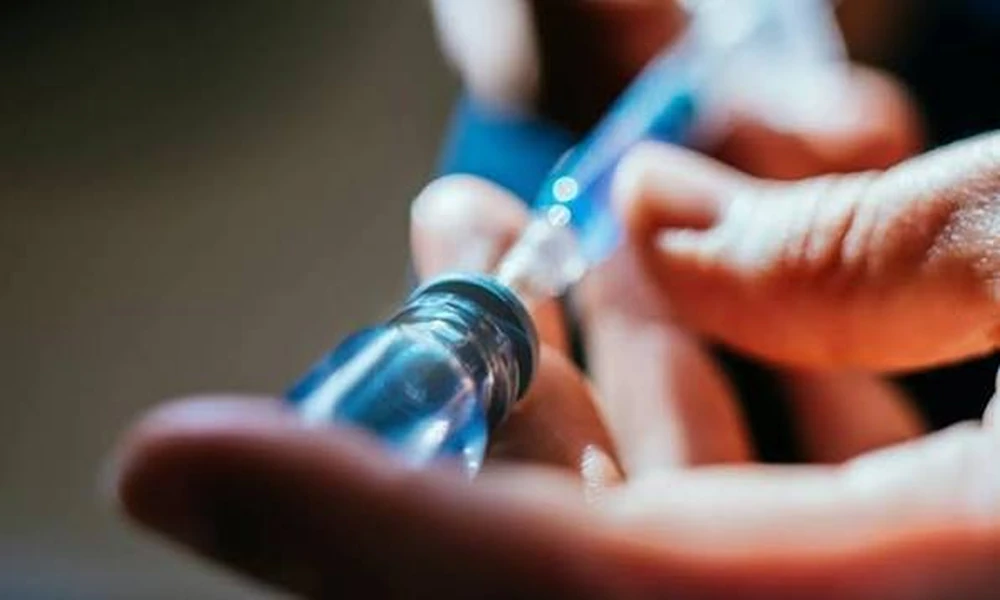

The number on a BPC-157 vial label and the amount of peptide inside it are not always the same size. Suppliers calculate and state concentration differently. The variables driving that difference, salt form, moisture, excipients, and whether a peptide content assay was run, aren’t visible in the label itself. Buyers comparing where to buy bpc 157 options across catalogues often end up comparing numbers produced by different calculations measuring various things. This creates dose accuracy problems that show up in the laboratory rather than on the order page.
5 mg can mean several things
A vial labelled 5 mg of BPC-157 may contain 5 mg of pure lyophilised material, not 5 mg of the peptide itself. The total material includes whatever peptide is present, the counterion associated with it from the salt form, any residual moisture remaining after lyophilisation, and any excipients added to the solution before drying. Each of those components contributes mass to the container without contributing peptide. The gap between total fill weight and actual peptide content depends on how much of each non-peptide component is present, which varies between batches and between suppliers.
Suppliers who perform a peptide content assay and label according to the corrected result state how much BPC-157 is actually in the vial. Suppliers who label by total fill weight without a peptide content correction state how much material is in the vial. This is inaccurate and less useful for dose calculation. The same vial weight from two suppliers with different labelling conventions contains different amounts of peptide. Nothing in the label format tells you which convention was used.
TFA salt weighs a significant mass
Solid-phase synthesis produces BPC-157 as a trifluoroacetate salt. TFA counterions bind to the basic lysine residue during synthesis and persist through purification unless a dedicated salt exchange step is performed. Each TFA counterion weighs 114 daltons. For BPC-157 at 1419 daltons, one TFA counterion represents roughly 7% of the combined peptide-plus-counterion mass. A vial containing BPC-157 as the TFA salt contains approximately 93% peptide by mass before moisture or excipients are added to the calculation.
Suppliers who convert TFA salt to acetate salt replace a 114 dalton counterion with a 59 dalton counterion. This increases the proportion of peptides. Two vials from two suppliers with the same labelled weight and HPLC purity deliver different amounts of BPC-157 per milligram of material if one is a TFA salt and one is an acetate salt. The salt form should appear on the batch certificate. When it doesn’t, buyers have no way to account for the counterion mass contribution in their dose calculations.
Moisture accumulates after manufacture
- Lyophilised peptide is hygroscopic. It absorbs water from the surrounding environment whenever it’s exposed to ambient humidity during manufacture, filling, packaging, shipping, or storage. Each milligram of water absorbed increases the total mass in the vial without adding any peptide.
- A vial that left the supplier at 1% residual moisture and arrived at the buyer’s laboratory at 4% residual moisture after transit contains measurably less peptide per unit weight than it did when it was sealed. The peptide content didn’t change. The proportion of the total mass it represents did.
- Incomplete lyophilisation starts this problem at manufacture rather than introducing it during handling. Two batches from the same supplier with the same fill weight can contain different peptide amounts if one cycle terminated with more residual moisture than the other. Nothing in a standard purity certificate reflects that difference.
Amino acid analysis
Quantitative amino acid analysis hydrolyses the peptide to its individual amino acids and quantifies each against independently calibrated external standards. The result gives the molar quantity of peptide present per unit sample weight, which converts directly to a peptide content percentage. That percentage, applied to the fill weight, gives the actual peptide quantity in the vial rather than the total material weight.
UV absorbance at 205 nanometres works as an alternative for peptides without aromatic residues like BPC-157. These compounds can’t be accurately quantified at the standard 280-nanometre wavelength used for tryptophan and tyrosine-containing compounds. This method requires calibration against a reference standard of confirmed composition to avoid the systematic errors that generic extinction coefficients introduce. Concentration levels vary across BPC-157 suppliers because fill weight, salt form, moisture, excipients, and assay method all affect the certificate number independently. A supplier who states peptide content as a confirmed percentage alongside the fill weight is giving buyers the number that actually determines how much BPC-157 they’re dosing with, rather than a labelled weight that may overstate it by a measurable margin.




Leave a Comment