
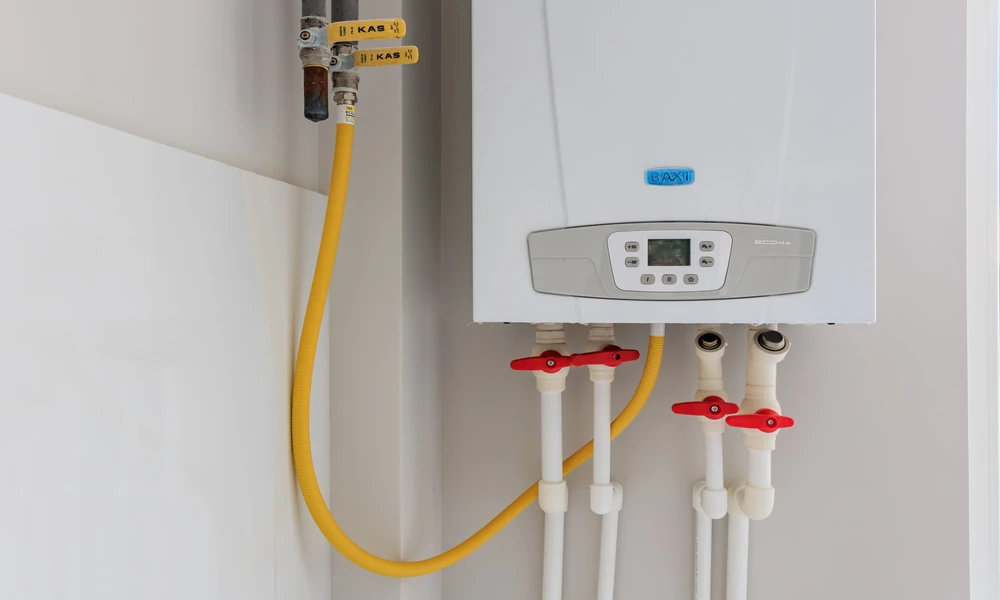

Four gallons per minute. That’s the number I keep coming back to when a Denver homeowner tells me the new tankless unit they bought feels weaker than the old tank it replaced. Four gallons per minute is roughly what a single shower pulls when the water’s hot and the house is cold. A lot of tankless units rated at nine gallons per minute on the box don’t deliver anything close to that in January at 5,280 feet. The rating is real. The conditions it was measured under just aren’t Colorado’s.
If you’re pricing tankless water heater installation in Front Range, CO, the specification sheet is the least useful document you’ll read. What matters is how the unit behaves on the coldest morning of the year, with two showers running and a dishwasher going, in a house fed by 40 degree groundwater. That’s the real test, and it’s the one almost nobody runs before signing an estimate.
Here’s the good news. Tankless is a genuinely better choice for most Front Range homes once you size it correctly and understand what altitude and inlet temperature do to performance. You just have to stop treating it like a box you swap out.
Two factors decide everything, and Colorado hits both
Every tankless unit carries a temperature rise rating. That’s the gap between the water coming in and the water going out, and it sets how many gallons per minute the heater can push at any given moment.
Colorado stacks two penalties on top of each other. First, cold groundwater. In summer, water enters your home at maybe 60 to 65 degrees. By late winter it can drop into the low 40s. If you want 120 degree water out of the tap, a summer day asks the heater for a 55 degree rise. February asks for 80. Same unit, same house, wildly different output.
Second, altitude. Gas appliances lose a percentage of their rated input as you climb, because thinner air carries less oxygen into the burner. The effect starts becoming noticeable around 2,000 feet and grows from there. Front Range cities sit between roughly 4,900 and 7,500 feet, so you’re always paying that tax. Bumping the gas pressure or derating isn’t something a homeowner should eyeball, and I’d push back hard on any installer who shrugs it off.
What altitude actually changes, and what it doesn’t
Altitude does not change the water. It doesn’t care how high your house sits. Altitude changes the burner, and a poorly adjusted burner means the heat exchanger never reaches the temperature the unit was designed around.
That’s why the sizing math gets conservative up here. On a cold morning, a unit that claims nine gallons per minute at a 35 degree rise might deliver closer to four or five at the 80 degree rise you actually need. Two showers plus a load of laundry and you’re standing in lukewarm water wondering what went wrong.
Standard industry method for this is the Manual J load calculation and the sizing guidance from the Air Conditioning Contractors of America, which exists precisely because guessing at capacity is how homes end up with undersized equipment. A real estimate starts with a calculation, not a look at your bathroom count.
Condensing or non condensing? Pick before you shop
Two categories of tankless heaters exist, and the choice shapes everything downstream.
Non condensing units cost less up front and vent through standard metal pipe, often reusing a path the old tank used. They’re also less efficient, and their output falls harder at altitude.
Condensing units cost more, capture far more of the heat in the exhaust, and vent through PVC, which is cheaper and easier to route. Their efficiency advantage tends to hold up better in cold inlet conditions, which is the entire reason I’d lean condensing for a Front Range home.
My rule of thumb: if you’re staying in the house more than five years, buy the condensing unit and skip the temptation to save four hundred bucks. You’ll feel it in the winter performance long before you notice the price difference on your card statement.
Oversizing is the mistake I see most, and it’s quiet
Homeowners assume bigger equals safer. In tankless it doesn’t. An oversized unit short cycles, the heat exchanger never runs in its efficient range, and the metal wears unevenly. You also pay more for equipment that behaves worse.
There’s a sensible middle. Size for the coldest realistic morning plus one simultaneous load, then verify the gas line can actually feed the demand.
And the gas line is where installs quietly fail. A tankless heater needs dramatically more gas at peak than a tank with a standing pilot. If your existing half inch line was sized for a storage heater, it may need upsizing. Some homes also want an isolation valve kit and a scale prevention cartridge so the heat exchanger stays clean, especially with Front Range water chemistry. The Environmental Protection Agency publishes general guidance on how water quality varies across regions and why treatment matters for equipment longevity, and it’s worth a read before you decide whether a filter is optional.
The Nesting Rule: how I sequence a Front Range tankless upgrade
There’s a sequence I’ve used enough times to trust, and it saves homeowners a lot of regret. I call it the Nesting Rule. You work from the inside out, and you never skip a ring.
- Water temperature first. Measure your incoming water temperature in January. That single number drives the sizing math more than square footage ever will.
- Fuel capacity next. Confirm the gas meter can supply peak demand, and price the line work before you price the heater.
- Venting third. Condensing units want PVC, non condensing want metal. Where the exhaust can exit often decides which unit you can use.
- Placement fourth. The unit should sit close to the fixtures that matter most. Long pipe runs waste the on demand advantage you paid for.
- Equipment last. Only now does the model number matter, because the first four rings already told you what it has to do.
Most homeowners do this backwards. They buy the unit, then discover the venting won’t fit, the gas line is short, and the model they chose can’t hit the rise they need in February. Reframing the purchase as a system decision rather than a product decision is the whole game.
Baseline data from the Department of Energy supports the general case for tankless, noting that on demand heating avoids the standby losses of a storage tank. That’s true, and it’s also incomplete. The savings show up when the unit is correctly sized for your climate, not when it’s correctly sized for a brochure.
Where tankless stops making sense
I’d tell you not to bother in a few situations. A two person household that rarely runs two hot water uses at once, with an existing tank under five years old and no space pressure, won’t recover the upgrade cost quickly. Rental properties where the owner isn’t paying the gas bill are a bad fit too, since the benefit lands on the tenant and the maintenance risk lands on you.
Everyone else, especially larger households with a finished basement bathroom or a house running two showers back to back on winter mornings, benefits. You’ll stop running out of hot water. You’ll stop paying to keep fifty gallons warm while you’re at work. Water heating is one of the largest single energy uses in a typical American home, and shrinking that load is one of the few home upgrades that pays you back in comfort and in dollars at the same time.
The catch is that none of it works if the install was treated as a swap. Get the number, measure your water, check your gas, then buy. Do you know what your incoming water temperature actually is in January? Most homeowners guess, and the guess is usually wrong.




Leave a Comment