
The urgency of e waste recycling Singapore becomes startlingly clear when one considers that the average household discards approximately 60 kilograms of electronic waste annually, a figure that grows in parallel with our deepening dependence on technology. In my years observing the intersections between human progress and environmental consequence, few challenges have struck me as simultaneously so pressing and so solvable as the proper disposal of our electronic detritus. We stand at a peculiar crossroads in human history, where the very devices that connect us, heal us, and propel us forward contain within them the seeds of environmental catastrophe if handled carelessly.
The Anatomy of Electronic Waste
To understand e-waste is to understand a kind of paradox. Within the sleek casing of a discarded smartphone lies a microcosm of the periodic table: gold, silver, copper, palladium, and rare earth elements extracted at great environmental cost from distant mines. Yet these same devices also harbour lead, mercury, cadmium, and brominated flame retardants, substances that, when released into the environment, become silent assailants of human and ecological health.
The smartphone you replaced last year contains roughly 0.034 grams of gold, an infinitesimal amount, yet Singapore disposes of enough phones annually to recover kilograms of this precious metal. “Electronic waste is not waste at all,” as one environmental scientist observed, “but rather a complex repository of valuable materials temporarily trapped in obsolete forms.” This reframing transforms our understanding entirely.
Singapore’s E-Waste Infrastructure
The island nation has developed a sophisticated network for managing electronic refuse, recognising that in a land-scarce environment, every decision about waste carries amplified consequences. The infrastructure for e waste recycling Singapore operates through multiple channels, each designed to intercept different streams of discarded technology before they flow towards landfills or incinerators.
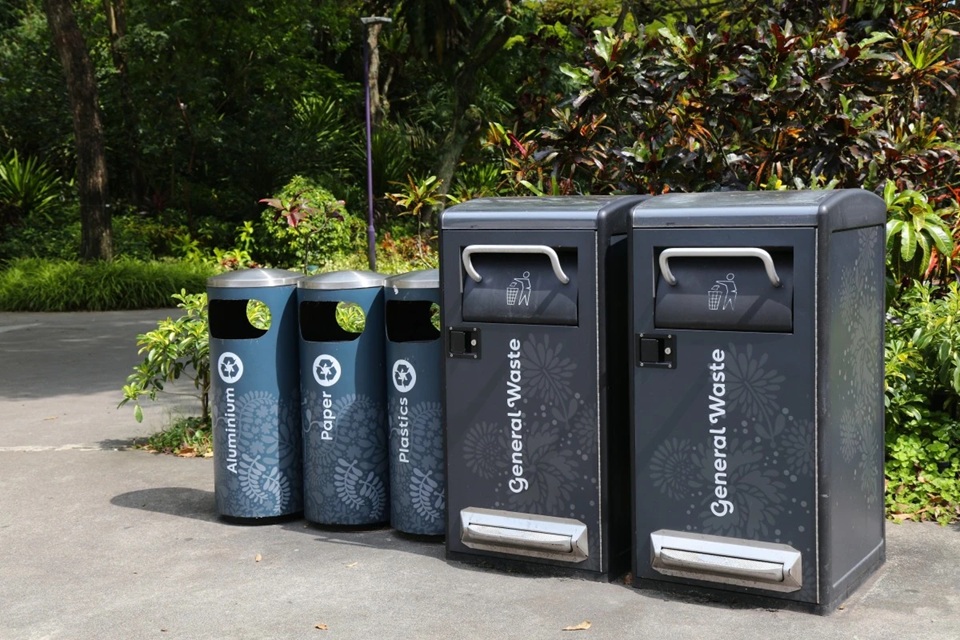
Collection points dot the urban landscape like nodes in a vast circulatory system:
- Public e-waste bins positioned strategically in housing estates and community centres accept small electronics, batteries, and accessories
- Retailer take-back programmes allow consumers to return old devices when purchasing new ones, creating a seamless cycle of replacement and recovery
- Designated collection events throughout the year focus on larger items such as computers, printers, and television sets
- Specialized collection for commercial and industrial e-waste manages the substantial volumes generated by Singapore’s business sector
This multi-pronged approach acknowledges a fundamental truth: convenience drives behaviour. The easier we make responsible disposal, the more likely citizens are to participate.
What Qualifies as E-Waste
The taxonomy of electronic waste extends far beyond the obvious categories. In the practice of e waste recycling Singapore, the definition encompasses a surprisingly broad spectrum of household and office items. Understanding this scope is the first step towards responsible disposal.
Items accepted include mobile phones and tablets, laptops and desktop computers, printers and scanners, keyboards and mice, televisions and monitors, audio equipment and speakers, kitchen appliances with electronic components, air conditioners and fans, lamps and light fittings, power cables and chargers, and even electric toothbrushes and shavers. Essentially, if it plugs in, runs on batteries, or contains a circuit board, it requires specialized handling.
The Journey of Discarded Electronics
Once collected, e-waste embarks on a carefully choreographed journey of dismantling and recovery. The process resembles, in some ways, a reversed assembly line, where instead of components converging to create a whole, a whole is methodically deconstructed into constituent parts.
Manual dismantling removes hazardous components such as batteries and mercury-containing backlights. Shredding reduces larger items to manageable fragments. Magnetic separation extracts ferrous metals whilst eddy current separators recover aluminium and copper. Advanced techniques, including hydrometallurgical and pyrometallurgical processes, recover precious metals from circuit boards and processors. The remaining plastics are sorted by polymer type for recycling or energy recovery.
“The challenge,” as one recycling specialist noted, “lies not in the technology but in capturing the waste stream before it disperses.” Indeed, a significant portion of e-waste still escapes formal channels, tucked away in drawers and storerooms, or worse, discarded with general refuse.
The Human Dimension
Behind every discarded device lies a story of human aspiration and obsolescence. We upgrade not merely for better features but because technology has become intertwined with identity and social participation. This psychological dimension cannot be ignored when addressing e-waste. The solution requires not only infrastructure but cultural transformation, a collective recognition that disposal is not the end of responsibility but an extension of it.
The environmental burden of electronic waste falls disproportionately on future generations. The heavy metals leaching from improperly disposed electronics accumulate in soil and water, entering food chains and eventually human bodies. Children, with their developing nervous systems, face particular vulnerability to these toxins. This intergenerational transfer of harm should trouble our conscience.
Taking Action
Individual participation in e waste recycling Singapore transforms abstract environmental policy into tangible impact. Before discarding any device, we must secure personal data through factory resets and physical destruction of storage media where appropriate. Batteries should be removed and disposed of separately. Items still functional might find new life through donation or resale, extending their utility whilst reducing demand for new production.
The choices we make regarding electronic consumption and disposal ripple outward in ways both visible and invisible. Each properly recycled device represents recovered resources, reduced mining impact, and prevented pollution. In aggregate, these individual actions constitute a powerful force for environmental stewardship, demonstrating that solutions to complex problems often begin with simple, deliberate choices about how we handle the technology that has become so essential to modern existence through proper e waste recycling Singapore.