
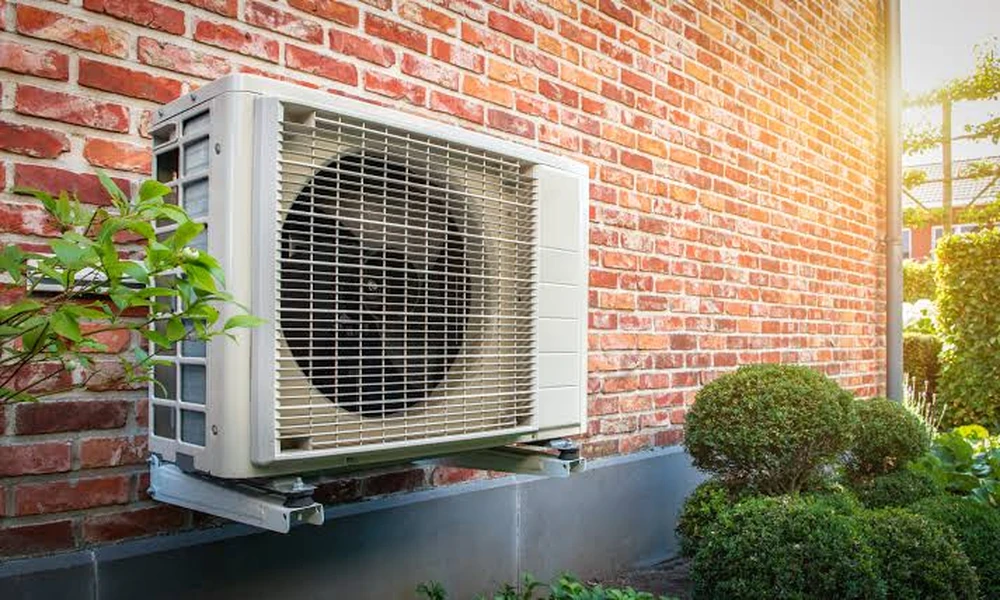

Most Georgia homeowners pick an AC unit the wrong way. They call a contractor, get a quote, and say yes. Nobody talks about system type, load calculations, or why a 3-ton unit that cooled a house in Ohio will struggle inside a Cherokee County home built in 1998 with no attic insulation. You end up replacing the system a decade early, and the house is never quite comfortable anyway.
This guide walks you through the actual decision: what variables matter, which system types fit which homes, and what sizing logic you need before anyone drops a unit on your condenser pad.
Why Georgia’s Climate Makes the Decision Harder Than Most
Georgia is not a mild-summer state. According to the National Weather Service, North and Central Georgia typically sees 30 to 60 days per year with highs of 90 degrees or more, with average afternoon temperatures in the upper 80s to around 90 degrees. In the hotter southern parts of the state, readings above 90 degrees can occur on 70 to 80 days a year.
That heat load stacks up differently than what the national averages suggest. A system rated to handle a 90-degree day in Kansas is handling 65% relative humidity on top of that same temperature in Georgia. Humidity, not heat alone, is what drives real discomfort indoors and what forces undersized systems to short-cycle or run continuously. Your AC is fighting two battles simultaneously, and it needs to be sized for both.
The Right-Size Before You Buy Framework
Before touching brand names or SEER ratings, run through these four inputs. They don’t replace a Manual J load calculation, but they’ll tell you quickly whether a contractor’s quoted tonnage makes sense or whether you’re being steered toward a low-margin unit.
- Square footage and ceiling height. The old rule of 400 square feet per ton is a starting point, not a final answer. High ceilings add volume; a 2,200-square-foot home with 10-foot ceilings carries more thermal mass than the same footprint with 8-foot ceilings.
- Sun exposure and window area. A west-facing house with large windows in Pickens County can run a full half-ton hotter in the afternoon than a shaded north-facing home of identical size.
- Insulation grade. Older Georgia homes, especially those built before 2000, routinely have R-11 or lower attic insulation. That alone can push tonnage requirements up by 15 to 20 percent compared to a modern build.
- Ductwork condition. Leaky ducts waste conditioned air before it reaches the room. A system that looks right on paper may feel undersized because 25 percent of its output is escaping into your crawl space.
If a contractor quotes tonnage without asking about at least three of these four items, ask them to walk you through their load calculation before signing anything.
System Types: What Actually Fits a Georgia Home
Three system types dominate Georgia residential installs. Each suits a different situation.
| System Type | Best Fit | Key Tradeoff |
|---|---|---|
| Central Split System | Homes with existing ductwork in good condition | Duct leaks kill efficiency; inspect before install |
| Ductless Mini-Split | Additions, older homes without ducts, bonus rooms | Higher upfront cost; no duct losses after install |
| Heat Pump | Homes wanting single-unit heating and cooling | Excellent in mild Georgia winters; loses efficiency below freezing |
For most existing Georgia homes with functional ductwork, a high-efficiency central split system is the practical choice. Ductless mini-splits are genuinely the better call for room additions or any structure that was never designed with a central air handler. Heat pumps have had a dramatic surge in residential adoption nationally, and they’re a smart pick for Georgia specifically because the winters here rarely hit the sustained sub-freezing temperatures that reduce heat pump output.
If you’re in an older home in a mountain community like Jasper, the ductwork question matters especially. Attic runs that weren’t sealed properly during original construction can lose enormous volumes of conditioned air to unconditioned space. Getting those ducts tested or replaced before the new system goes in protects your investment. Reputable companies providing air conditioning installations in Jasper will assess existing ductwork as part of the installation process rather than treating it as someone else’s problem.
SEER Ratings: Enough to Matter, Not Enough to Obsess Over
SEER, the Seasonal Energy Efficiency Ratio, measures how much cooling output you get per unit of electricity consumed. A higher SEER costs more upfront and saves money over the unit’s life. The question worth asking is how long that payback window actually is for your situation.
Air conditioning is already one of the single largest electricity draws in American homes. According to the U.S. Energy Information Administration’s 2020 Residential Energy Consumption Survey, air conditioning accounted for about 19 percent of total electricity consumption in U.S. homes that year. In a hot-humid state like Georgia, that share is higher. Gaining even two SEER points on a system that runs five months a year makes a measurable difference on your electric bill.
That said, a 16 SEER unit sized correctly for your home will outperform a 20 SEER unit that’s oversized by a ton. Oversized systems cool too fast, shut off before they pull humidity out of the air, and leave the house feeling clammy even at 72 degrees. Chasing SEER without sorting out sizing first is a common and expensive mistake.
The current federal minimum for new residential central AC units is 15 SEER2 in the Southeast. Anything below that standard shouldn’t be quoted to you for a new install, full stop.
Why Professional Installation Is Non-Negotiable
The equipment choice matters. The installation matters more. Refrigerant charge, airflow balance, electrical connections, and condensate drainage are all installation variables, and every one of them affects both efficiency and equipment life. A unit installed incorrectly will underperform from day one and wear out faster.
Demand for qualified HVAC technicians has grown substantially, and that trend isn’t reversing. The U.S. Bureau of Labor Statistics projects employment of HVAC mechanics and installers to grow 11 percent from 2025 to 2035, much faster than the average for all occupations. Commercial construction, data centers, and new residential builds are all driving that demand. In practical terms, it means the labor market is tight and the gap between an experienced installer and a rushed one can be significant.
What you’re vetting when you hire a contractor isn’t just whether they carry the brand you want. You’re vetting their technicians’ experience with load calculations, their process for verifying airflow after install, and whether they’ll pull permits where required. Ask those three questions before you commit.
Before the Installation Appointment: A Practical Checklist
- Get a Manual J load calculation, not just a square-footage estimate.
- Have your ductwork inspected and, if needed, sealed or replaced before the new unit goes in.
- Confirm the contractor will verify refrigerant charge with gauges after startup, not just by feel.
- Ask about the warranty on labor separately from the equipment warranty. They’re different documents.
- Request a walkthrough of the thermostat setup and filter schedule before the technician leaves your driveway.
None of these items add significant cost to a legitimate installation. Any contractor who pushes back hard on providing them is telling you something worth knowing before you sign.
The Honest Bottom Line
Georgia’s summers are long and humid, and no amount of smart shopping overrides bad sizing or a poor install. The right AC system for your home is the one matched precisely to your square footage, your ductwork, your insulation, and your sun exposure. Brand loyalty matters less than load calculation. SEER ratings matter less than correct tonnage. And the contractor’s process matters more than either.
Pick the system type that fits your home’s structure, demand a load calculation in writing, and hire a team that treats installation quality as the product they’re actually selling.




Leave a Comment